UFO news is having a moment. Governments are releasing files, politicians are holding hearings, and every week there’s a new headline promising that this time it’s real. Some of it is genuinely fascinating. Some of it is nonsense. Most of it is somewhere in between.
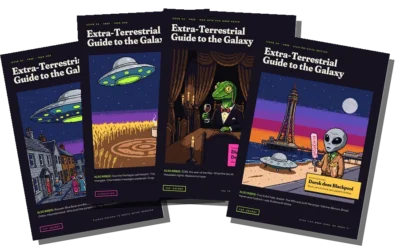
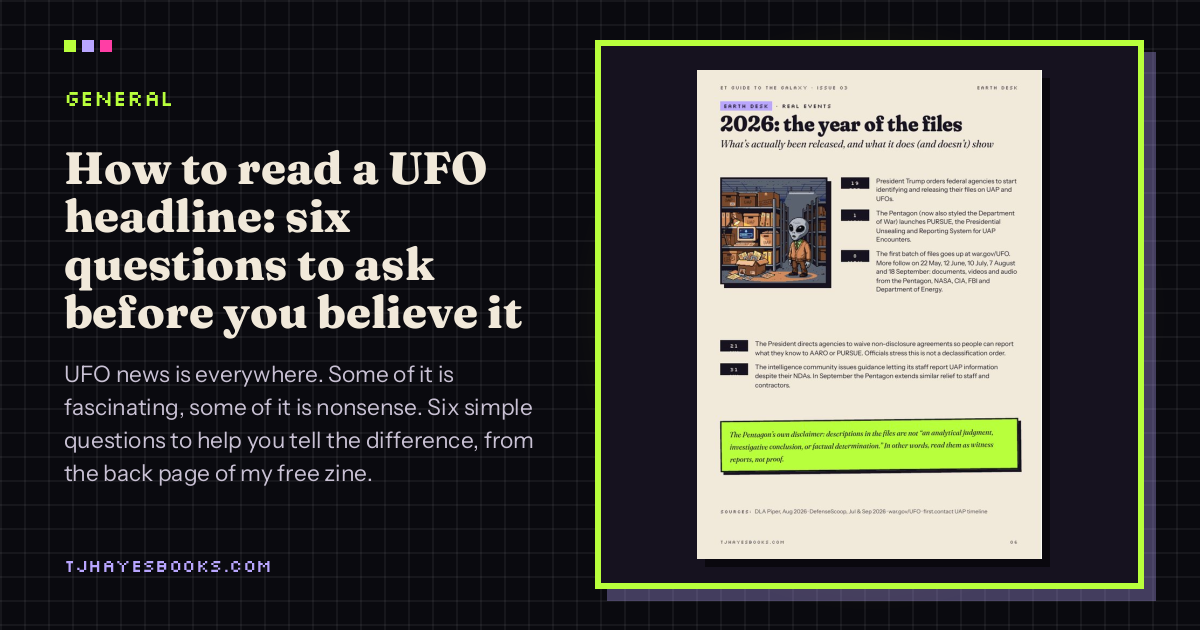
This checklist first appeared on the back page of my free zine, The Extra-Terrestrial Guide to the Galaxy. It works for any big claim, not just aliens.
Six questions to ask
1. Who is the source?
A named witness, an official document, or “a source close to”? The further a story is from a real, named person or a document you can read, the more careful you should be.
2. Is there any data?
Radar, video, sensor logs, photographs with their original files? Or only a story? Stories can be true, but data is what lets other people check.
3. Has anyone offered an ordinary explanation?
Most sightings turn out to be planes, satellites (especially Starlink trains), Venus, balloons, drones or birds catching the light. A good article says whether those were ruled out, or ignored.
4. Is the headline bigger than the article?
It usually is. “Pentagon confirms UFOs” often turns out to mean “the Pentagon released a document describing something it hasn’t identified yet”. Unidentified means unidentified, not alien.
5. Who benefits if you believe it?
Someone selling a book, a show or clicks? Someone keeping a secret? Both sides have reasons to spin. Notice them.
6. Can you find the original?
The US government now publishes many of its UAP files online. If an article quotes a document, go and read the document. It’s often more interesting, and more careful, than the coverage.
The ladder of evidence
It helps to picture evidence as a ladder. At the bottom: “someone told someone”. Then a named witness. Then a document. Then sensor data. And at the very top: something you can put on a table and let anyone examine.
Most UFO stories live on the bottom rungs. That doesn’t make them false. It makes them unproven. Keep an open mind and careful eyes. The truth deserves both.
– TJ